Your dock setup affects access, stability, and long term maintenance. The right choice depends on water depth, shoreline conditions, and how you use your boat.
This guide breaks down the differences so you can choose with confidence.
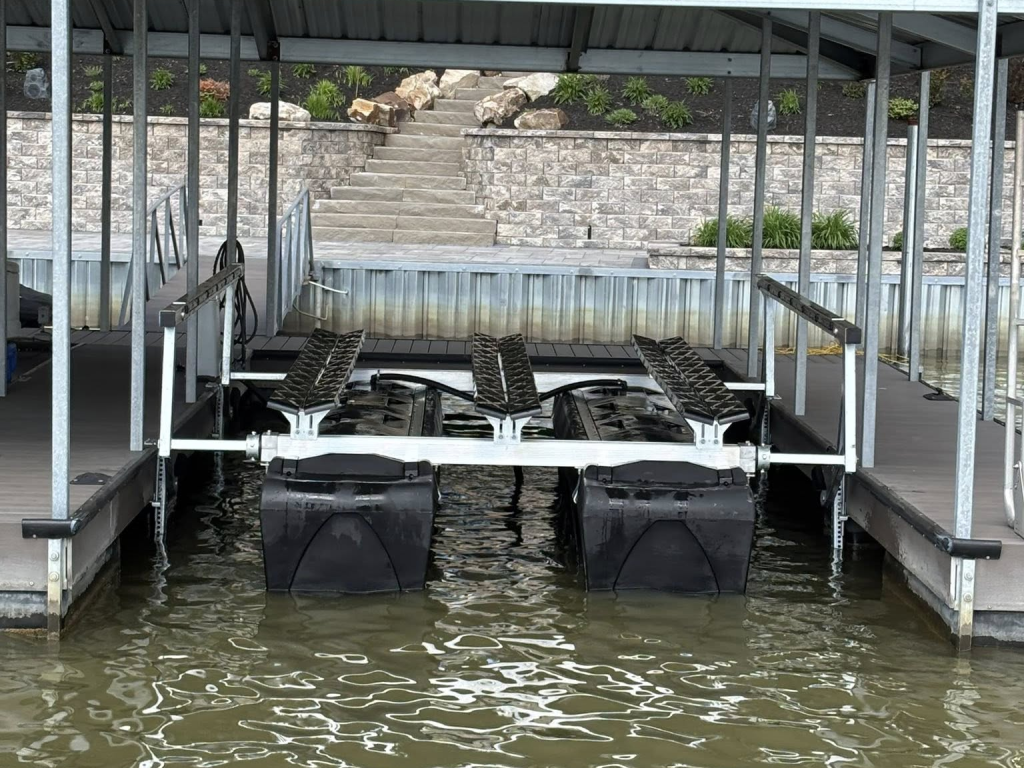
What Is a Floating Dock?
A floating dock sits on the water and rises and falls with water levels.
Key benefits:
- Adjusts to changing water levels
- Works well in deeper water
- Easier to expand or reconfigure
- Softer feel underfoot
Best use cases:
- Lakes with fluctuating water levels
- Deeper shorelines
- Areas where permanent posts are difficult
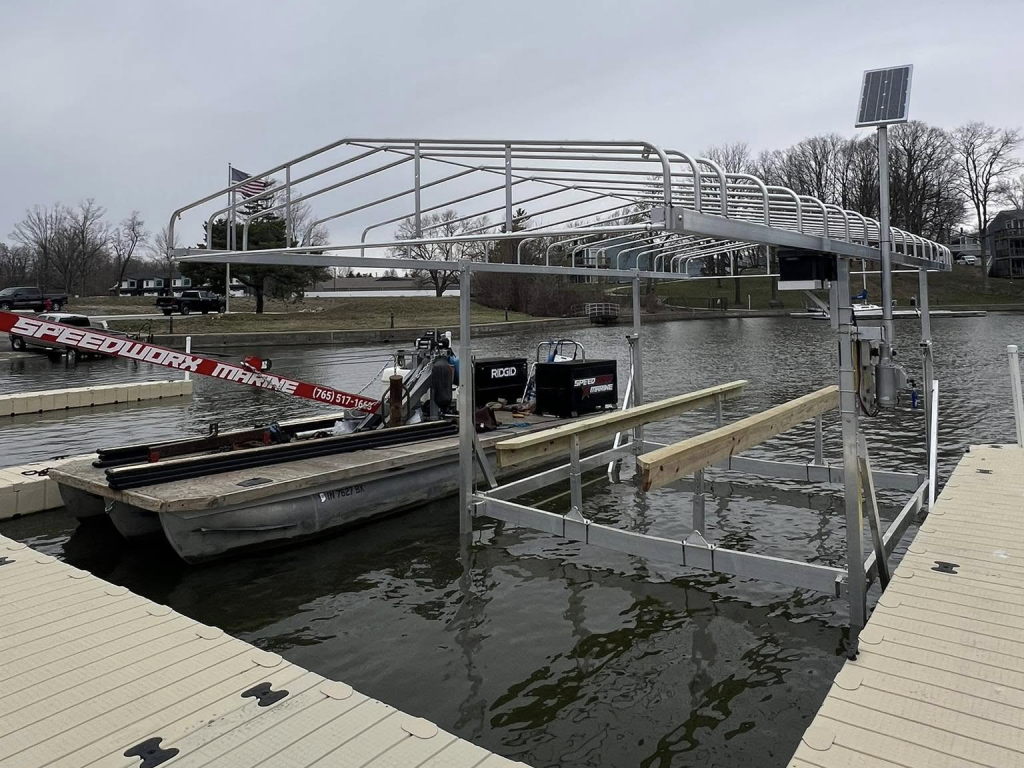
What Is a Stationary Dock?
A stationary dock is fixed in place using posts driven into the lake bottom.
Key benefits:
- Solid and stable feel
- Lower movement in waves
- Long lifespan with proper materials
Best use cases:
- Shallow water
- Stable lake levels
- Firm lake bottoms
Key Differences That Matter
 |
Water Depth
|
 |
Water Level Changes
|
 |
Lift Stability
|
 |
Lift Installation
|
 |
Lift Maintenance
|
Which Dock Is Right for You?
Choose a floating dock if:
- Your lake level changes during the season
- You have deeper water
- You want flexibility for future changes
Choose a stationary dock if:
- Your water level stays consistent
- You want maximum stability
- Your shoreline supports post installation
Get the Right Dock the First Time
Every shoreline is different. Soil, depth, and usage all matter.
Speedworx Marine evaluates your setup and recommends the right system so you avoid costly changes later.